
In short: Residents apply at a Department of Land Transport (DLT) office with a passport and non-tourist visa, a residence certificate or work permit, a medical certificate under one month old and, if you have one, a home licence. You complete training, eyesight and reaction tests and, for a first licence, a written and practical test. The first licence lasts two years; the next lasts five. Updated November 2026.
Who needs a Thai licence?
Visitors can drive with a valid International Driving Permit or an ASEAN licence, as the Public Relations Department confirms. If you live in Thailand, a Thai licence is the practical choice. Tourists whose licence is not valid in Thailand can apply for a 30-day temporary licence at the provincial land transport office where they entered, according to Thailand.go.th.
Step 1: Gather the documents
- Passport with a valid visa (not a tourist visa) and copies of the photo, visa and entry-stamp pages.
- Proof of address: a residence certificate from your local immigration office or your embassy, or a work permit showing your address. For a residence certificate, immigration usually wants the TM.30 receipt your landlord filed.
- Medical certificate from a Thai clinic or hospital, issued within the last month. It takes a few minutes.
- Your home licence or IDP, with a certified English or Thai translation if it is in another language.
The US Embassy in Thailand gives the same list. Requirements vary a little between offices, so check with the one covering your address.
Step 2: Book and attend the land transport office
Many DLT offices now work by appointment. Arrive early and allow most of a day. Staff check your documents first and then send you on to training and tests.
Step 3: Training
Applicants complete a road-safety training session. The Phetchabun immigration office notes a one-hour online course for foreigners at dlt-elearning.com for those converting a foreign licence. Applicants without a valid licence take longer training at the office.
Step 4: Physical tests
Expect a colour test (red, green and amber), a depth-perception test, a peripheral-vision test and a brake-reaction test, in which you lift your foot from a pedal to the brake when a light changes.
Step 5: Written and practical tests
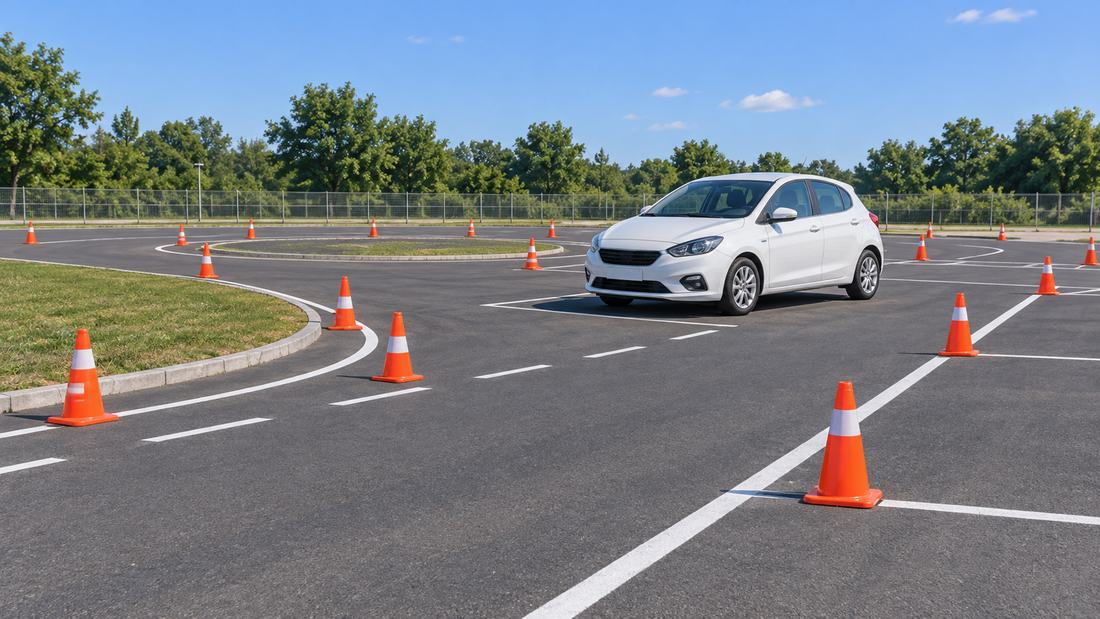
First-time drivers sit a computer-based theory test of 50 questions, offered in English, and need 45 correct answers to pass; they also drive a short course with set manoeuvres. Applicants converting a valid foreign licence often skip these tests, but each office decides.
Step 6: Pay and collect
The US Embassy lists fees of 205 baht for a car licence and 105 baht for a motorcycle licence. Your photo is taken at the office and the card is printed the same day. The first licence is a two-year temporary licence; when it expires you can renew it for a five-year licence.
For help with paperwork, VIP Luxury Services, a concierge service, also offers visa assistance.
Common questions
Can I get a Thai licence on a tourist visa?
Generally no. Offices ask for a non-tourist visa and proof of address.
Do I need a car licence and a motorcycle licence?
Yes. They are separate licences with separate tests and fees.
What if I fail the written test?
You can retake it; ask the office about its rules on when.
How we put this together: this guide follows official Thai government and embassy pages linked above. Rules and fees change, so confirm with your local office. Checked in November 2026.