
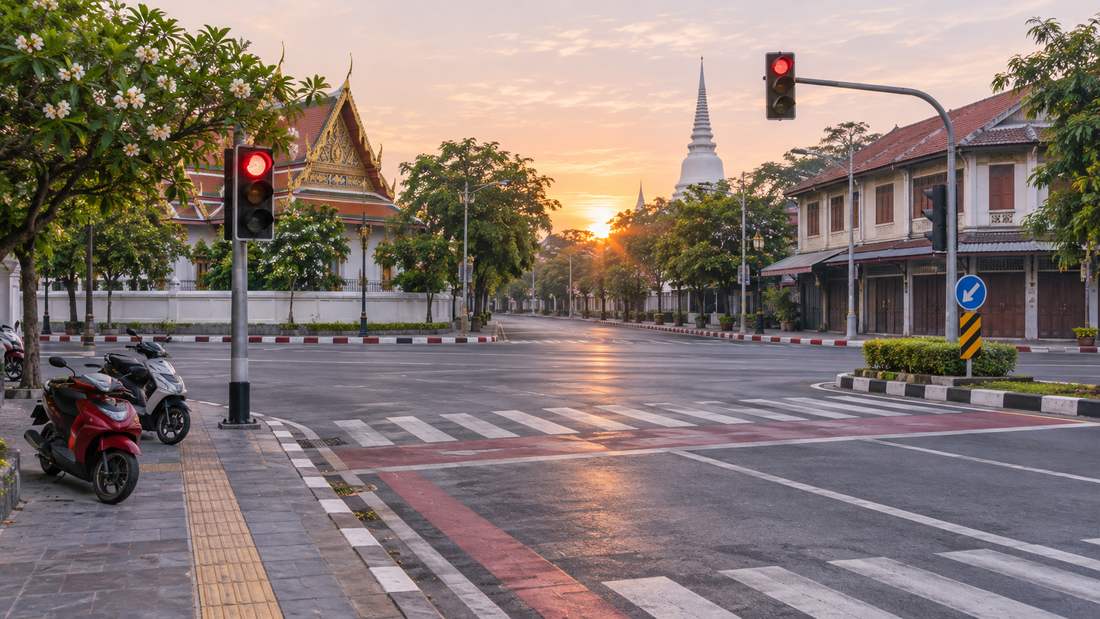
In short: Drive on the left with a valid licence or International Driving Permit. Wear a seat belt in every seat and a helmet on every motorcycle. The drink-driving limit is 50 mg per 100 ml of blood, or 20 mg for under-20s and temporary-licence holders. Hand-held phones are banned. In an emergency call 191, or 1669 for an ambulance. Updated November 2026.
Licences
Carry your licence and passport at all times. Visitors need a valid International Driving Permit or an ASEAN licence; residents need a Thai licence. A car licence does not cover motorcycles, which need their own licence. See how to get a Thai driving licence.
Driving on the left
Thailand drives on the left, so cars are right-hand drive and you overtake on the right. Take extra care when turning at junctions and when pulling out of car parks, where habit can put you on the wrong side.
Speed limits
The WHO’s country profile lists national maximums of 80 km/h in towns, 90 km/h on rural roads and 120 km/h on motorways. Lower limits are often posted, especially in cities and near schools, and posted signs always take priority.
Drink-driving
Under the Land Traffic Act, a driver is over the limit above 50 mg of alcohol per 100 ml of blood. The limit is 20 mg for drivers under 20, drivers on a temporary (two-year) licence, and drivers without a valid licence, according to the Ministry of Justice. A first offence can bring up to a year in prison, a fine of 5,000–20,000 baht, or both, and a licence suspension of at least six months. Refusing a breath test is treated as drink-driving.
Seat belts, helmets and phones
- Seat belts are required for front and rear seats.
- Motorcycle helmets are required for riders and passengers and must be fastened.
- Hand-held phone use while driving is banned.
Junctions and roundabouts
Junctions are where most visitors get caught out. Motorcycles filter through traffic and often pull up on both sides of you at lights. Some junctions allow a left turn on red where a sign says so; otherwise, wait. At roundabouts, give way to traffic already on the roundabout.
Parking
Do not park on kerbs painted red and white, or where signs forbid it. Police can clamp or tow cars that are parked illegally.
After a crash
Stop, make the scene safe and call for help. Thailand.go.th lists 191 for police, 1669 for emergency medical services, 1155 for the Tourist Police and 1193 for the Highway Police. Call 1669 first if anyone is hurt. Photograph the scene and the vehicles and contact your insurer before agreeing anything.
Common questions
Is my home licence valid in Thailand?
Only if it is from an ASEAN country. Otherwise, carry an International Driving Permit with it.
Can tourists ride a scooter?
Only with a licence or IDP that covers motorcycles, and a helmet. Travel insurance may not cover you otherwise.
How we put this together: rules follow the official Thai and WHO sources linked above. Checked in November 2026.